
As we sail past the first four months of 2025, the fishing scene along Costa Rica’s Central Pacific has proven once again why this region remains one of the world’s premier saltwater destinations. From the deep blue waters offshore of Los Sueños to the vibrant nearshore reefs and river mouths around Jaco and Playa Herradura, this year has kicked off with action, variety, and unforgettable catches.
The fishing calendar started strong in January and has remained consistent through the end of April, despite a few tricky moon phases. Here’s an in-depth look at what’s been biting, what’s working, and what anglers can expect heading into the rainy season.

Offshore Report: Tuna, Mahi, Sailfish, and Marlin
The offshore bite has been alive and well since the new year began, with yellowfin tuna taking the spotlight in a big way. These fish have ranged from football-size 20-pounders to solid 100-pounders—and even a few pushing beyond that mark. They’ve been traveling with spinner dolphins, often feeding aggressively during early morning and late afternoon hours.
Captains have had the most success slow-trolling live bait, especially blue runners and goggle-eyes. When bait gets scarce or the fish push deeper, switching to poppers and vertical jigs has kept the rods bent. One of the standout techniques has been pitching poppers to boiling schools on the surface while keeping one or two lines down deep for any monsters cruising below.
Mahi-mahi, or dorado, have been another consistent player offshore, especially after early March when the first rains pushed debris lines out to sea. The presence of floating logs, trash lines, and palm fronds created the perfect habitat for these aggressive feeders. They’ve been striking rigged ballyhoo, skirted lures in bright pink and green, and even topwater plugs.
Sailfish season arrived right on cue in January and peaked nicely in February, as it traditionally does. Although numbers dipped slightly during March’s full moon phase, the sails were still around, just requiring a bit more finesse. The classic bait-and-switch method using teasers followed by circle-hooked ballyhoo has remained deadly. On some days, boats have raised upwards of 10 to 20 fish, with catch rates depending on angler skill and crew timing.
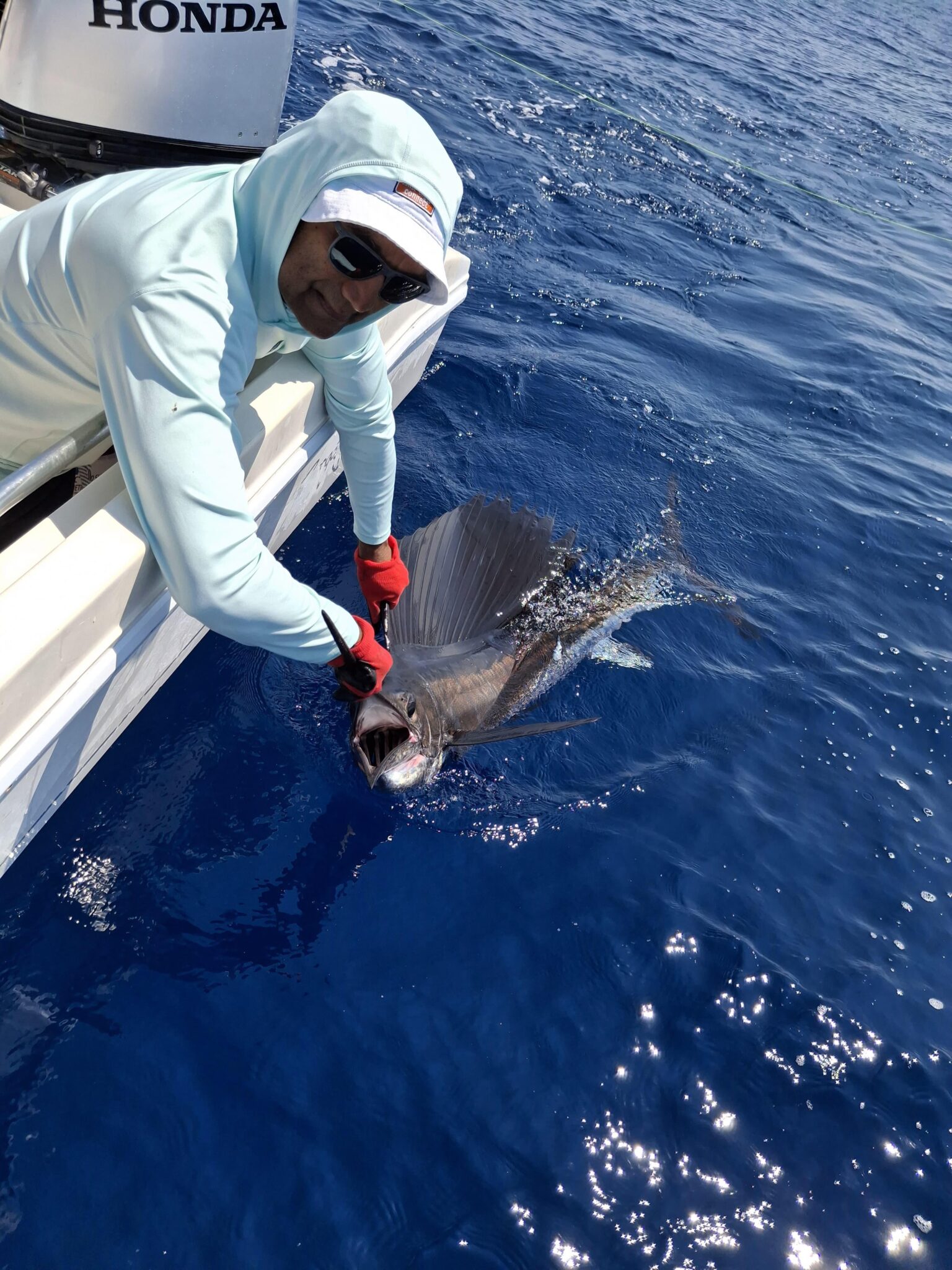
And then there’s the marlin—a bit more elusive so far this year, but the bite has still produced some unforgettable encounters. Blue marlin have been spotted offshore of Los Sueños and even closer to Quepos during mid-April. Most of the strikes came on slow-trolled live bonito or skipjack, especially when fished deeper behind the spread. Several striped marlin were also reported, usually further south, and one or two black marlin made surprise appearances.
Inshore Action: Roosters, Snapper & More
While offshore fishing has taken the headlines, the inshore bite hasn’t been slacking either. Roosterfish, the unmistakable kings of the Central Pacific, have been consistent throughout the entire four-month stretch. They’ve been feeding aggressively around rocky points, river mouths, and reef structures between Herradura and Esterillos.
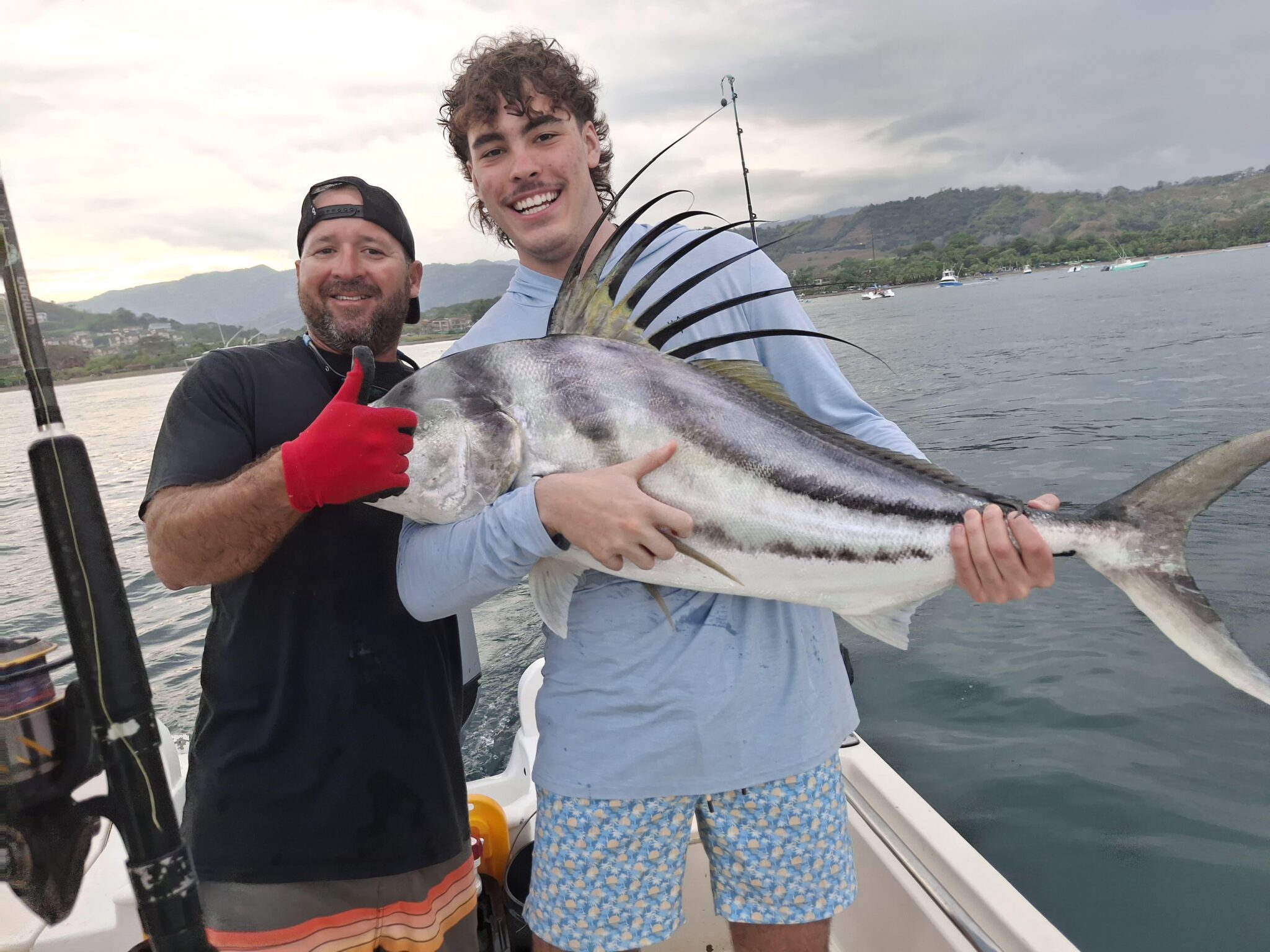
Live sardines, moonfish, and mullet have been the top baits, with most of the action coming on the incoming tide. Anglers using light spinning gear and slow-trolling baits close to the surfline have had multiple double-digit days. Some of the roosters have been pushing the 50-pound mark—a true bucket-list catch for visiting anglers.
The snapper bite—particularly cubera snapper—has also been solid, especially around submerged reefs and rocky drop-offs. These powerful fish respond best to live bait fished on heavy tackle or jigs worked slowly near the bottom. More than one guest this season has underestimated their strength, only to get rocked back into the reef within seconds. Broomtail grouper have joined the party too, rewarding patient bottom fishers with a hard fight and a delicious payoff.
Moon Phase Update: Full Moon Making Things Tricky
One notable pattern we’ve seen early this year is the impact of the full moon on fishing activity. While some full moons in the past have had minimal impact, 2025’s lunar cycles, particularly in the 3 first three months, have caused a noticeable slowdown in both offshore and inshore action.
Sailfish and tuna became more selective during the brighter nights, and baitfish movements were less predictable. That said, skilled captains made the most of early morning or very late afternoon bites, and many adapted by changing tactics—going deeper, switching bait types, or staying closer to structure.
The key takeaway? The fish are still there during full moons—you just have to work a bit harder and smarter.
Bait of Choice in 2025: What’s Been Working
Success this season has depended not just on location, but also on what’s at the end of your line. Here’s what’s been producing the most action from January through April:
Offshore:
- Live bait: Blue runners, goggle-eyes, bonito
- Dead bait: Rigged ballyhoo (naked and skirted)
- Lures: Bright poppers for tuna and dorado, squid chains for sailfish, and large skirted lures for marlin
- Teasers & Dredges: Dredge teasers with squid chains have made all the difference in raising sailfish and marlin
Inshore:
- Live bait: Sardines, moonfish, mullet
- Jigs: Slow-pitch metal jigs for snapper and grouper
- Plugs: Diving plugs for roosterfish when bait is hard to come by
Los Sueños, Jaco, Quepos: Where the Action Has Been
From the protected waters near Los Sueños Marina, boats have had fast runs to prime offshore areas. The combination of high-end boats, experienced crews, and easy access to deep water has made Los Sueños a reliable launch point for targeting pelagic species.
Meanwhile, Jaco’s inshore action has been especially hot this year. Local pangas and center consoles have been working the reefs and surf zones daily, bringing in a steady mix of roosterfish, snapper, and jacks. The beachside town’s vibe and proximity to the bite have made it a top pick for casual anglers and serious sportfishers alike.
Further south, Quepos and Isla Damas have offered up their own unique fishing experiences. More remote reefs and less pressure mean the occasional surprise catch—and it’s also where some of the better grouper action has been spotted.
What’s Coming Next: May & June Outlook
With the rainy season starting to approach, anglers can look forward to more debris lines offshore, which usually translates to improved mahi-mahi and wahoo action. These fish love the shade and bait that collects around floating logs and trash lines.
Sailfish will still be around, though slightly more scattered, while marlin activity may begin to pick up again as water temperatures fluctuate. Inshore fishing typically remains strong throughout the early rainy season, especially for roosterfish and snapper, which thrive in these transitional conditions.
Conclusion: A Strong Start to 2025
It’s safe to say that the first four months of 2025 have delivered the goods. From the non-stop tuna action to those picture-perfect roosterfish catches, anglers fishing out of Jaco, Los Sueños, and Quepos have had every reason to smile.
Despite a few tricky full moon phases, the fish have been cooperative, the bait has been plentiful, and the conditions have remained ideal. If this trend continues, we’re in for a truly exceptional year of fishing in Costa Rica.

